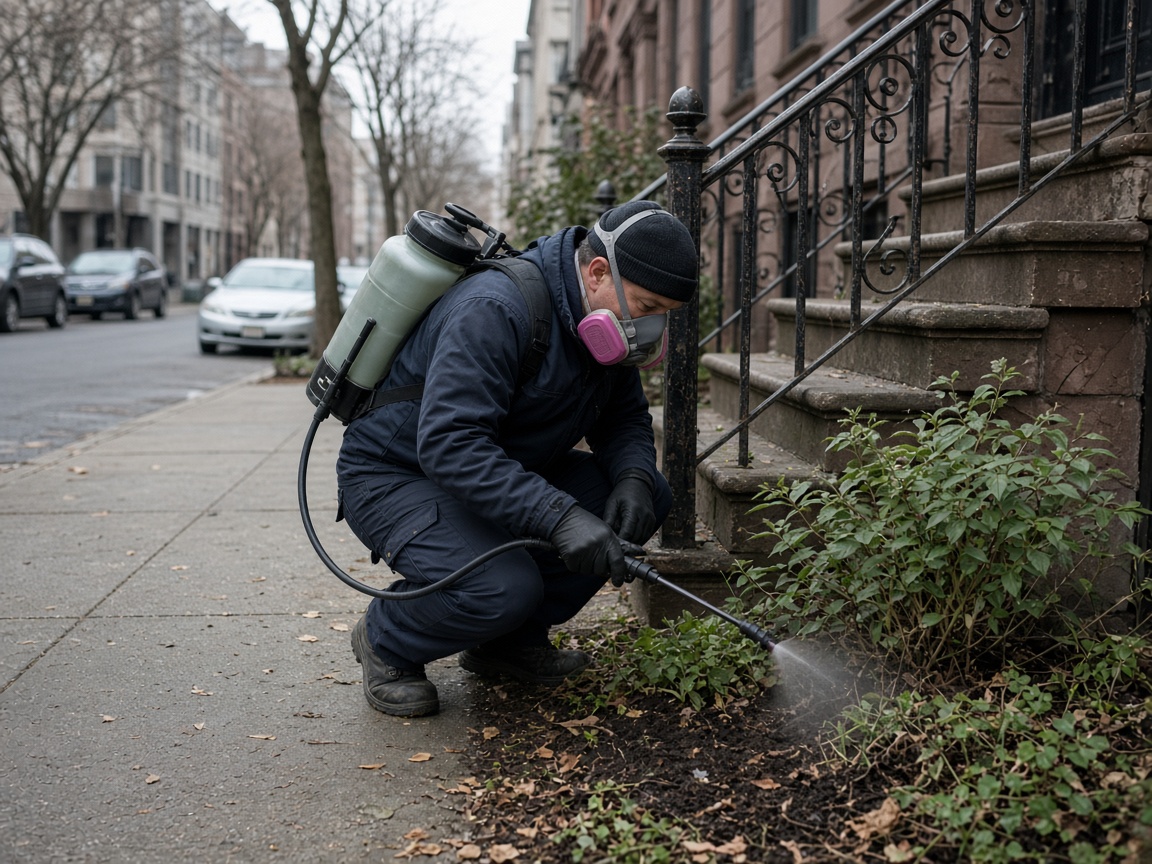
Manhattan's older brownstones and pre-war apartment buildings often feature small backyards or shared garden spaces that trap moisture from summer humidity and Central Park runoff, creating ideal flea breeding pockets near soil and leaf litter. Technicians focus on these micro-habitats with targeted applications that reach under decks, along fence lines, and around pet doors without drifting into neighboring units or street traffic. Wildlife corridors from Riverside Park and Central Park regularly reintroduce fleas, so treatments account for ongoing host pressure rather than one-time knockdowns.
Dense urban terrain means crews must work around foot traffic, limited access points, and strict building rules on chemical use near playgrounds or dog runs. Products are selected for quick dry times and low odor to suit high-rise balconies and shared courtyards common on the Upper West Side. Edge cases include treating raised garden beds where fleas hide in mulch and coordinating with neighbors when infestations cross property lines in tight West Village blocks.
Weather patterns matter: heavy spring rains followed by warm spells accelerate flea cycles in shaded areas behind townhouses. Operators time visits to avoid peak pedestrian hours and use residual barriers that hold up through typical Manhattan microclimates. Every job includes mapping of pet travel paths and nearby green spaces to prevent quick rebound from untreated sources.
Technician insight
In Manhattan, the thing that catches most people out with Yard & Outdoor Flea Control is how Central Park wildlife and shared garden walls let fleas move between properties overnight, especially in pre-war brownstones where cracks under decks stay damp year-round.
West Village Brownstone Backyard
A homeowner reported fleas on their dog after walks near Washington Square Park. Inspection found active breeding in shaded mulch beds and under a wooden deck built against the building foundation. Targeted applications to soil and perimeter plus a follow-up visit eliminated the cycle while neighbors remained unaffected.
Yard & Outdoor Flea Control Services We Offer
✓Perimeter Barrier Treatment
Creates a lasting chemical zone around building foundations and fences to block fleas migrating from Central Park edges or neighboring lots.
✓Lawn and Garden Spot Treatment
Applies targeted granules and sprays to shaded soil and mulch beds where fleas thrive in older Manhattan backyards with poor drainage.
✓Pet Area and Dog Run Sanitation
Treats outdoor pet enclosures and shared runs common in co-op buildings while using pet-safe timing and re-entry guidelines.
✓Deck Patio and Balcony Control
Addresses flea hotspots on elevated outdoor spaces typical of Upper West Side apartments using low-drift formulas suitable for tight quarters.
✓Wildlife Corridor Support
Reduces flea pressure near park borders by treating vegetation and structures that serve as bridges for raccoons and stray animals.
How it works
- 1
Site Inspection
Walk the full outdoor space including yards, patios, and access points to map moisture pockets and pet routes.
- 2
Targeted Application
Apply treatments to soil, perimeter, and harborage areas while protecting adjacent walkways and neighboring properties.
- 3
Follow-Up Visit
Return within the recommended interval to treat emerging stages and adjust for any new wildlife activity.
- 4
Prevention Guidance
Provide specific steps for residents to reduce leaf litter and manage pet access near park edges.
Pricing
Cost depends on property size, number of outdoor zones, and current infestation pressure; quotes provided after inspection.