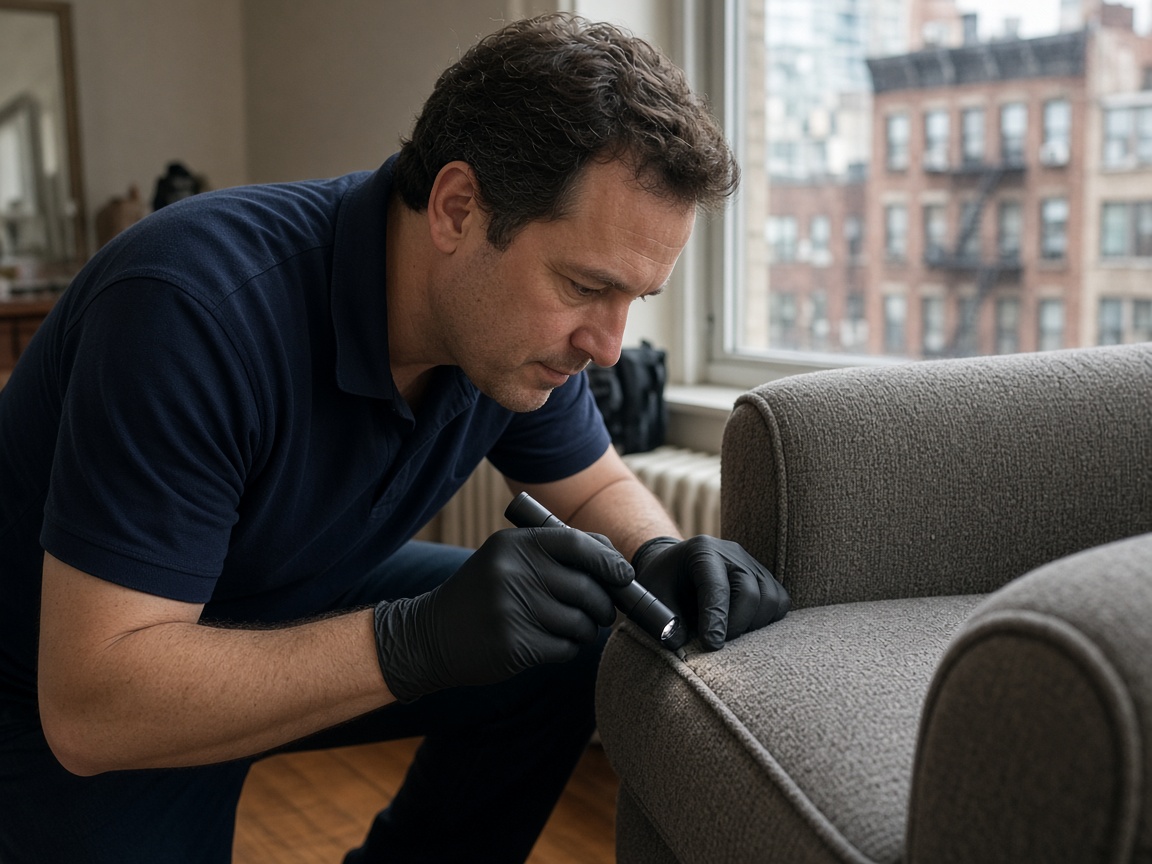
Flea inspections in Manhattan require attention to the dense apartment stock and older pre-war buildings common throughout the Upper West Side and Midtown. Fleas often travel through shared walls, floor voids, and HVAC ducts that connect units, making single-apartment checks insufficient without coordinated access to adjacent spaces. Technicians examine baseboards, subfloor gaps, and pet resting areas where eggs accumulate in carpet fibers or hardwood cracks typical of buildings constructed before 1940.
Weather patterns in the Manhattan area influence flea activity, with humid summer months accelerating larval development in shaded outdoor spaces like building courtyards and rooftop gardens. Winter cold drives fleas indoors through unsealed entry points around windows and pipes in high-rises. Inspections account for these shifts by checking both interior harborages and perimeter zones where pets enter from Central Park-adjacent sidewalks.
Edge cases include multi-unit buildings where one untreated apartment can re-infest neighbors, requiring clear communication about access limits and follow-up timing. Inspections also note soil conditions around older brownstones where moisture retention supports outdoor flea populations year-round.
Technician insight
In Manhattan, the thing that catches most people out with Flea Inspection is how quickly fleas move through the shared walls and old vent stacks in pre-war buildings around Central Park West. Homeowners often treat only their own unit and miss the source in the neighboring apartment or hallway crawlspace.
Upper West Side Apartment Re-Infestation
A tenant in a 1920s building near 25 Central Park W reported recurring fleas after treating only their unit. Inspection revealed activity traveling through floor voids from the apartment below. Coordinated checks and targeted treatment of both units stopped the cycle.
Flea Inspection Services We Offer
✓Apartment Unit Flea Scans
Room-by-room inspection of Manhattan apartments focusing on carpet edges, baseboards, and pet zones where fleas hide in older flooring.
✓Pet Bedding and Furniture Examination
Detailed review of pet bedding, upholstered furniture, and mattresses common in Upper West Side homes to locate flea eggs and larvae.
✓Shared Wall and Vent Assessment
Inspection of walls and ventilation systems in pre-war buildings to trace flea movement between connected Manhattan units.
✓Outdoor Perimeter and Courtyard Checks
Evaluation of building entrances, balconies, and ground-level areas near Central Park for fleas entering from outdoor sources.
✓Multi-Unit Building Surveys
Coordinated checks across several apartments in one building to identify infestation spread common in dense Manhattan housing.
How it works
- 1
Initial Property Walkthrough
Technician reviews the full apartment or home layout, noting pet areas and potential entry points from hallways or neighboring units.
- 2
Targeted Visual and Tool Inspection
Use of flashlights and inspection tools to examine cracks, carpets, and furniture for live fleas, eggs, or droppings.
- 3
Shared Space Evaluation
Assessment of vents, walls, and common areas to map how fleas may move between units in the building.
- 4
Findings Report and Recommendations
Clear summary of detected activity with specific next steps based on the property's age and layout.
Pricing
Pricing depends on unit size, number of rooms inspected, and whether access to adjacent units is needed.