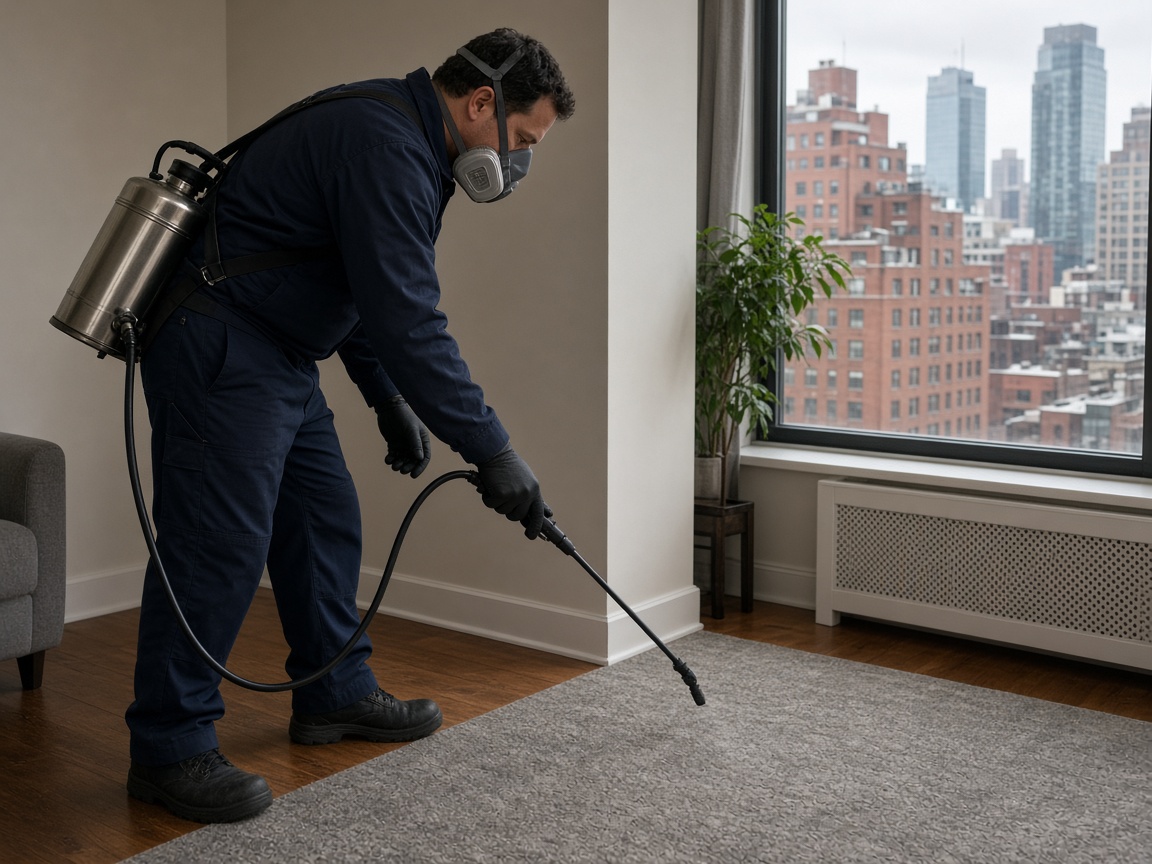
Manhattan condos built before 1940 often feature hardwood floors, radiator pipes, and narrow baseboard gaps that let fleas move between units. Treatment starts with mapping entry points around pet sleeping areas and along shared walls, then applies targeted dusts and sprays that reach behind toe kicks without disturbing neighbors. Summer humidity in the city keeps flea eggs viable longer on carpet remnants left from past renovations.
High-rise access on Central Park West means carrying equipment through service elevators and timing visits around doorman schedules. Technicians focus on treating the unit's perimeter and any pet crates stored in common hallways rather than broad spraying that could drift into vents. Follow-up visits check for reinfestation from neighboring apartments where untreated pets remain.
Residents frequently overlook fleas on upholstered window seats or in storage closets near laundry chutes. The work includes lifting area rugs to treat the pad underneath and advising on daily vacuuming of elevator lobbies if the building allows. This prevents the cycle from restarting when outdoor temperatures rise again in spring.
Technician insight
In Manhattan the thing that catches most people out with Condo Flea Treatment is how fleas travel through the narrow gaps around radiator pipes in pre-war buildings on Central Park West. Homeowners treat only the visible carpet and miss the eggs that drop behind the toe kicks, so the problem restarts when the neighbor's untreated dog walks the hallway.
Upper West Side Two-Bedroom Infestation
A resident called after noticing bites on their ankles near the radiator. Inspection found fleas moving from the hallway through baseboard gaps into the living room carpet. We dusted the perimeter, treated the pet bed area, and returned after fourteen days to confirm the unit stayed clear while advising on hallway vacuuming.
Condo Flea Treatment Services We Offer
✓Pet Sleeping Area Treatment
Focuses on bedding zones, crates, and nearby flooring where eggs accumulate in Manhattan condos with limited square footage.
✓Baseboard and Crevice Dusting
Applies insecticidal dusts into gaps around radiators and under toe kicks common in pre-war Upper West Side buildings.
✓Carpet and Area Rug Treatment
Targets fibers and padding in older apartment carpets that trap flea larvae during humid summer months.
✓Upholstery and Window Seat Application
Treats fabric surfaces on sofas and built-in seating where pets rest in compact condo layouts.
✓Vacuum-Assisted Sanitation
Removes eggs and debris from hard floors and low-pile rugs before chemical follow-up in tight urban spaces.
How it works
- 1
Unit Inspection
Walk through the condo to locate pet resting spots, baseboard gaps, and any signs of spread along shared walls.
- 2
Targeted Application
Apply dusts and liquids to cracks, carpets, and pet areas while avoiding drift into building ventilation.
- 3
Sanitation Guidance
Instruct on daily vacuuming routines and safe storage of pet items to break the flea life cycle.
- 4
Follow-Up Visit
Return after two weeks to check treated zones and address any new activity from neighboring units.
Pricing
Cost depends on unit size, number of rooms with carpet, and whether multiple visits are needed; upfront quotes provided after inspection.