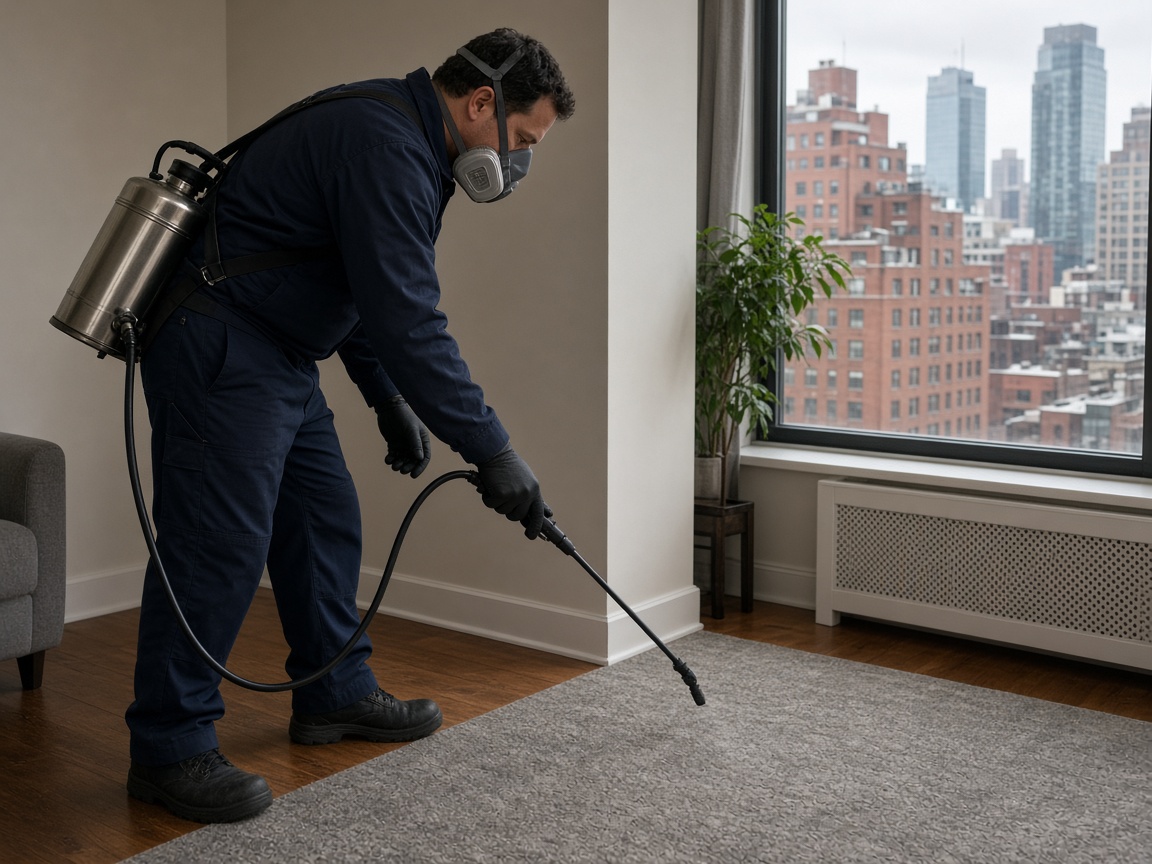
Flea Treatment Manhattan Pros handles infestations in Inwood's older apartment buildings and row houses along Broadway and Dyckman Street. Pre-war construction with shared walls and basement entries lets fleas move between units quickly once they hitch a ride on pets or wildlife from nearby green spaces. Our crews arrive from 25 Central Park W at any hour to inspect yards, ground-floor units, and common areas that border Inwood Hill Park.
Inwood's dense blocks between the Harlem River and the park ridge create steady moisture that helps flea eggs survive winter. We focus on the actual entry points—cracks around 207th Street foundations, ivy-covered fences at Isham Park edges, and pet entrances in converted brownstones—rather than blanket sprays. Every visit starts with a walkthrough of the specific property so treatment matches the building age and layout.
Residents near the Dyckman Farmhouse and the Baker Athletics Complex see recurring issues when raccoons and stray cats cross into backyards. We map those routes during the first call and place targeted applications that stay effective through the humid months typical along the northern Manhattan waterfront.
Around Inwood
We regularly work near:
- 📍Inwood Hill Park
- 📍Isham Park
- 📍Dyckman Street
- 📍Dyckman Farmhouse Museum
- 📍207th Street
Flea Treatment Manhattan in Inwood — Local Notes
- •Many Inwood buildings from the 1920s-1940s have raised basements and shared courtyards that connect directly to Inwood Hill Park paths, giving fleas easy access after heavy rain.
- •Narrow lots on side streets off Broadway limit equipment staging, so we carry compact sprayers and focus on interior cracks and pet bedding first.
- •Proximity to the Harlem River keeps ground-level humidity higher, extending the time flea larvae remain active in soil along Isham Park and 10th Avenue edges.
- •Multi-unit walk-ups with common stairwells require coordinated treatment of at least three adjacent apartments to stop migration between floors.